|
Mental
Fitness
Detailed
info on how to succeed with neurotechnology
Brain
Lightning
2 capsules noticeably improve
focus, creativity, and work!
Light
& Sound Mind Machines
Instant
meditation, stress reduction, accelerated learning:
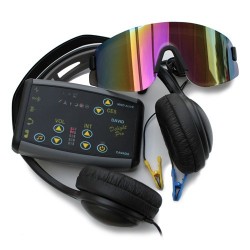
• PROTEUS
advanced
Light/Sound
:
All the Sirius
programs and features with advanced PC link and BiColor lights!
• A.D.D.
&
Learning Disorders
Self-Improvement
Solutions:Tapes/CDs
HypnoPeripheralProcessing
for fast, automatic changes in thoughts, feelings, and behavior.
• Make
your own self-improvement tapes!
• Electrical-Stimulation
• MagneticPulser
for deeper penetration. Excellent for periodontal, lymph, etc.
• CES
Ultra:
Multi-use CES, TENS and more.
Enhances Relaxed Awareness, Cognitive
Functioning, Memory, I.Q.
• NeuroTrek:
Advanced Digital CES. The
ultimate in Cranial Electrical Stimulation, More control of frequencies
for neurotransmitter balancing, endorphin release, deep relaxation, sleep,
IQ gains, and more.
• Oasis:
Miniature
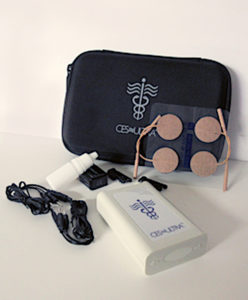
multipurpose microcurrent CES synchronized to lights!
• Zappers:
Electrical and magnetic stimulation for parasite elimination.
• EEG
& Biofeedback
• ThoughtStream
GSR:
Portable relaxation trainer
• WaveRider:
Complete
home and professional training system.
Used
Gear
Research:
• L/S
and Migraines
• L/S
and PMS
• PMS,EEG,
and L/S
• Float
tanks R.E.S.T.
For related cutting edge
holistic health products, visit our other pages:
• Colloidal
Silver:
The
Natural Antibiotic you make for pennies!
• Comfortaire:
Adjustable
Air Beds at great prices.
• UltraPure
Water:
affordable
high quality water filters. |
|
|
A.D.D., Learning Disorders and Mind
Machines |
Elixa has many products that can help people of all ages
improve their ability to concentrate, learn, create, and cope. We have simple yet powerful
light and sound brainwave synchronizers that act like training wheels for the mind. These
devices range in price from $99 (see
Sirius ) to over $400.
Click here for a simple training procedure
that you can do with most Light/Sound (L/S) devices.
You can also consider biofeedback/neurofeedback devices like the WaveRider which use a few connections to the scalp and your PC. The
easy-to-use software tells you when you've reached the desired state of mind and the
effects last and become second nature with time. We hope that more parents and educators
will try these non-invasive approaches before resorting to drugs.
Click
here to read
the article "Being in Control. The Role of Biofeedback in Controlling
ADD" by Jason Alster, MSc who found that using GSR (see
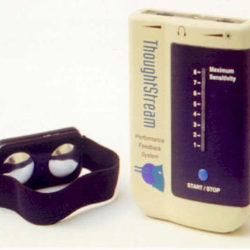
ThoughtStream) relaxation training helped
students diagnosed with ADD when he began viewing the condition as
stress-related.
Best of Stress Management: 10-Week Multimedia
Course
for a Healthier, More Relaxed Life.
Now on sale!
Consider this information from J. of Neurotherapy,
2(2):8-13, 1997. Click here to read full paper.
PMS, EEG, AND PHOTIC STIMULATION
David Noton, PhD of The Forest Institute
"The treatment of ADHD with photic
stimulation has been developed extensively by Harold Russell and his
associates, using frequencies of 18 Hz and 10 Hz alternating for two
minute periods, with demonstrable improvements in IQ scores and behavior
(Russell and Carter, 1993). Many clinicians appear to be using photic
stimulation informally for ADHD and the other slow brainwave disorders,
with anecdotal reports of successful treatment but with very few
published results.
Treatment of Slow Brainwave Disorders with Neurofeedback
Many neurofeedback (EEG biofeedback) practitioners report successful
treatment of some or all of these slow brainwave disorders. For example,
the Lubar's have for many years worked with children with ADHD, training
them with beta frequency biofeedback, with excellent results (Lubar 1991
and 1989); the Othmer's have a long history of success with beta
frequency biofeedback with patients with all of the disorders in this
group (Othmer 1994); and there are many other practitioners using this
approach. Generally the feedback protocol involves positive
reinforcement of beta frequencies and negative reinforcement of theta
frequencies, though various other protocols are also used successfully.
The Brainwave Frequency Hypothesis
A reasonable explanation that is commonly proposed for the above
experimental and clinical results is that the key to treating these
disorders (all characterized by excessive slow brainwave activity) is to
speed up the brainwave frequency. It is proposed that this can be
accomplished either by training the patients to speed up their own
brainwaves (beta-training neurofeedback) or by entraining the patients'
brainwaves with a photic stimulation device flashing at beta
frequencies.
Photic Stimulation vs. Neurofeedback
If both neurofeedback and photic stimulation are effective in the
treatment of these "slow brainwave" disorders, perhaps the
best treatment may often be a combination of the two. Photic stimulation
has the advantages of low cost and portability; it can be given to
patients as "homework" between sessions and as pre-training
for neurofeedback, to "teach" the brain the frequency that is
to be trained. Neurofeedback develops the patient's sense of
self-control and also has the unique advantage of localisation, the
ability to affect neuronal activity and brain blood flow specifically at
a training site chosen for its relevance to the disorder, rather than
just in the cortex in general. The combination of neurofeedback and
photic stimulation seems particularly appropriate for ADHD, where the
patient may initially have motivational difficulties with the
neurofeedback training and need assistance from any other modality
available."
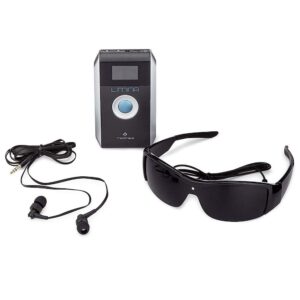
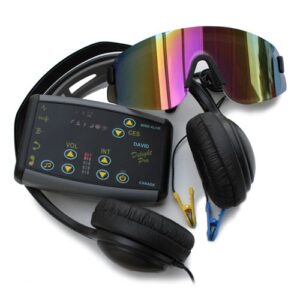
The system below incorporates advanced programming of pulsed lights and
sounds to improve focus and attention. Click here for a simple training
procedure that you can do with most Light/Sound (L/S) devices.
See the
Sirius
or Proteus for low-cost L/S that you can use with the whole family!
Fun to use and effective within a few sessions.
We sell mind machines and biofeedback with a 30 day return privilege
with a 15 % restocking fee. We also rent equipment and buy good used gear.
Bibliography of Neurofeedback and AD/HD:
A Comparison of EEG Biofeedback and Psychostimulants in Treating
AD/HDs. Thomas P. Rossiter, and Theodore J. La Vaque.
Journal of Neurotherapy, 1, Summer 1995
EEG Biofeedback in the Schools: The Use of EEG Biofeedback to Treat
ADHD in a School Setting. William D. Boyd, Susan E. Campbell.
Journal of Neurotherapy, 2 (4)
Gates, States, Rhythms, and Resonances: The Scientific Basis of
Neurofeedback. Andrew Abarbanel
Journal of Neurotherapy, 1 (2)
Improved Neuronal Regulation in ADHD: An Application of 15 Sessions
of Photic-Driven EEG Neurotherapy. Graham J. Patrick
Journal of Neurotherapy, 1 (4)
Neurotherapy and Drug Therapy in Combination for Adult ADHD,
Personality Disorder, and Seizure. Hansen, Trudeau, & Grace
Journal of Neurotherapy, 2 (1)
ADHD: Neurological Basis and Treatment Alternatives
Arreed Barabasz and Marianne Barabasz
Journal of Neurotherapy, 1, Summer 1995
Neurological Basis and Neurofeedback Treatment of ADHD
Joel F. Lubar, & Judith O. Lubar, 1995
Patient-Directed Neurofeedback For AD/HD.
Thomas R. Rossiter, Ph.D.
Journal of Neurotherapy, 2 (4)
Event Related Potentials of Subgroups of Children with ADHD and the
Implications for EEG Biofeedback
Michael Linden, Richard Gevirtz, Robert Isenhart, and Todd Fisher
Journal of Neurotherapy, 1 (3)
ADHD. Pharmacotherapy and beyond
Tan G, Schneider SC
Postgrad Med 101 (5): 201-204 (May 1997)
EEG Biofeedback: A New Treatment Option for ADD/ADHD.
Alhambra, Fowler, and Alhambra.
Journal of Neurotherapy, 1 (2)
A controlled study of the effects of EEG biofeedback on cognition
and behavior of children with attention deficit disorder and
learning disabilities. Linden M, Habib T, Radojevic V
Biofeedback & Self-Regulation 21 (1): 35-49 (Mar 1996)
Evaluation of the effectiveness of EEG neurofeedback training for
ADHD in a clinical setting as measured by changes in
T.O.V.A. scores, behavioral ratings, and WISC-R performance.
Lubar JF, Swartwood MO, Swartwood JN, O'Donnell PH
Biofeedback & Self-Regulation 20 (1): 83-99 (Mar 1995)
Ten-year stability of EEG biofeedback results for a hyperactive boy
who failed fourth grade perceptually impaired class. Tansey MA
Biofeedback & Self-Regulation 18 (1): 33-44 (Mar 1993)
Discourse on the development of EEG diagnostics and biofeedback for
attention-deficit/hyperactivity disorders. Lubar JF
Biofeedback & Self-Regulation 16 (3): 201-225 (Sep 1991)
Electroencephalographic biofeedback of SMR and beta for treatment
of attention deficit disorders in a clinical setting. Lubar JO, Lubar
JF. Biofeedback & Self-Regulation 9 (1): 1-23 (Mar 1984)
EMG and EEG biofeedback training in the treatment of a 10-year-old
hyperactive boy with a developmental reading disorder.
Tansey MA, Bruner RL
Biofeedback & Self-Regulation 8 (1): 25-37 (Mar 1983)
Operant conditioning of EEG rhythms and ritalin in the treatment of
hyperkinesis. Shouse MN, Lubar JF
Biofeedback & Self-Regulation 4 (4): 299-312 (Dec 1979)
EEG and behavioral changes in a hyperkinetic child concurrent with
training of the sensorimotor rhythm (SMR): a preliminary
report. Lubar JF, Shouse MN
Biofeedback & Self-Regulation 1 (3): 293-306 (Sep 1976)
Mental Fitness
Light & Sound Machines | A.D.D. & Learning Disorders
| EEG & Biofeedback | Electrical-Stimulation
| Tapes | Used Gear
Products
Colloidal Silver Generators | Comfortaire Mattresses | Water Filtration Systems | E-Stim
| Mental Fitness | Dr. Wolfe's
Dentals
Home | About | Products | Order | Contact | Links |